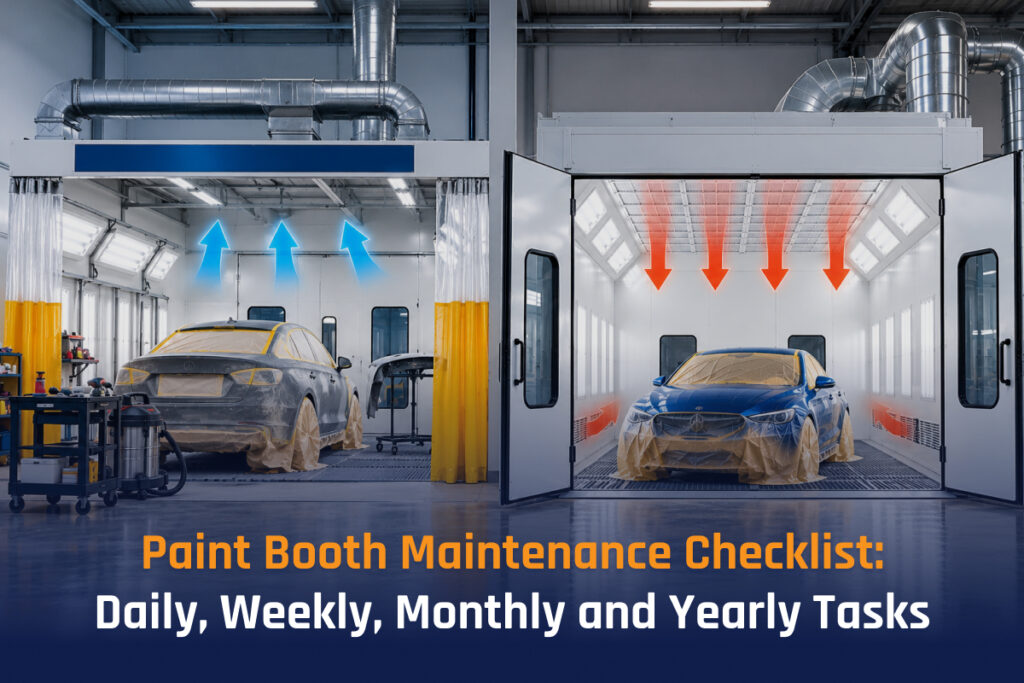
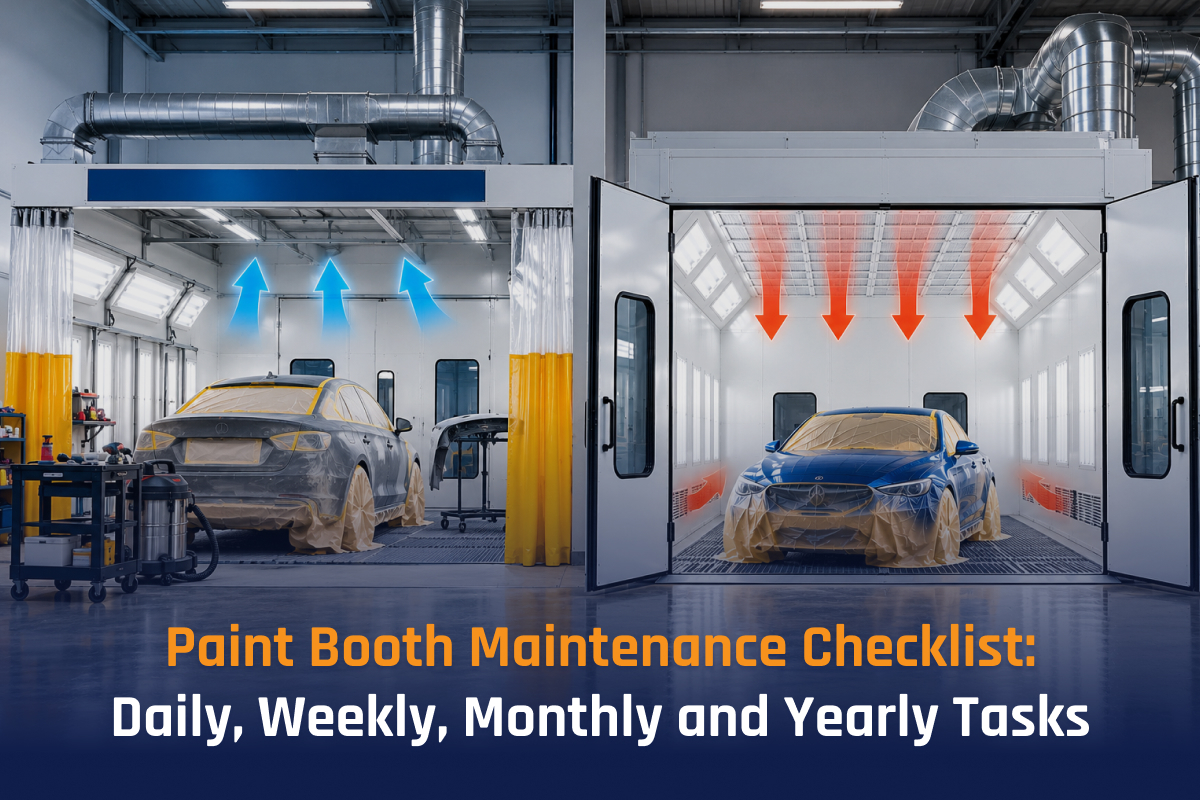
A paint booth works hard every day. It pulls in fresh air, filters it, heats it and pushes out fumes, all while your painters try to get a clean finish. Like any equipment, it needs regular care. Most booth problems, such as dust in the finish or weak airflow, start small and grow only because a simple task was skipped. This checklist breaks paint booth maintenance into daily, weekly, monthly and yearly tasks, so your team knows exactly what to do and when.
Why Regular Paint Booth Maintenance Matters
A well-maintained spray paint booth gives you cleaner finishes, less rework and lower energy bills. It also keeps your workplace safer and helps you stay compliant with NFPA-33 and OSHA standards. Skipping maintenance may save a few minutes today, but it usually costs more later in repairs, downtime and wasted paint.
This matters even more in hot and busy markets. A paint booth Phoenix shops run through months of desert heat works harder every day, with fans, filters and motors under heavy load. In conditions like these, a regular maintenance routine is what keeps the booth running smoothly.
Daily Paint Booth Maintenance Tasks
1. Clean the Booth Floor and Walls
Overspray and dust settle on the floor and walls after every job. If they are left there, they dry, build up and get blown back onto the next vehicle.
What to do: Sweep or vacuum the floor at the end of each day and wipe off wet overspray before it dries. Never use compressed air to clean the booth, as it only moves the dust around.
2. Check the Manometer Reading
The manometer tells you how loaded your filters are and whether the booth is holding the right pressure.
What to do: Check the reading before the first job of the day. A sudden jump or drop is an early warning sign of clogged filters or an air balance problem.
3. Inspect Doors and Seals
A booth can only stay clean if it is properly closed. Gaps around doors let dust and unfiltered air inside.
What to do: Make sure doors close fully and look for torn or loose seals.
4. Remove Tools, Rags and Paint Cans
A paint booth is not a storage room. Used rags and open paint cans are a fire risk and also collect dust.
What to do: Clear everything out at the end of the shift and store paint and solvents in a proper mixing room.
Weekly Paint Booth Maintenance Tasks
5. Inspect Intake and Exhaust Filters
Filters are the lungs of your booth. Exhaust filters load up fastest because they catch overspray from every job.
What to do: Look at both intake and exhaust filters every week. Replace exhaust filters when they look heavily loaded or when the manometer reaches the limit set by the manufacturer.
6. Clean the Light Fixtures
Dirty light panels make the booth darker, and painters may miss defects or apply uneven coats.
What to do: Wipe the light glass from the outside and replace any tubes or panels that have failed.
7. Check the Booth Wall Coating
Most shops use a peelable booth coating or protective film on the walls. It makes cleaning easier and keeps the walls bright.
What to do: Look for areas where overspray has built up heavily, then peel and recoat them.
8. Clean Floor Grates and Pit
In a full downdraft paint booth, air travels down through floor grates. When the grates fill up with paint, airflow drops.
What to do: Lift and clean the grates, and check the pit filters below them.
Monthly Paint Booth Maintenance Tasks
9. Check Ceiling or Intake Filters
Intake filters last longer than exhaust filters, but they still load up with dust from outside air.
What to do: Inspect them every month and replace them based on your hours of use or manometer reading.
10. Inspect Fans, Motors and Belts
Worn belts and dry bearings reduce airflow and make the motor work harder.
What to do: Check belt tension, look for cracks, listen for unusual noise and lubricate bearings if your fan model needs it.
11. Test the Heating System
If your booth has a heater or bake cycle, a weak burner will affect curing and finish quality.
What to do: Run a full cycle and confirm the booth reaches and holds the set temperature.
12. Check the Fire Suppression System
Your fire suppression system is something you hope you never use, but it must be ready at all times.
What to do: Check that gauges are in the green, nozzles are clean and caps are in place. Book a certified technician for official inspections as required by your local fire code, usually every six months.
Yearly Paint Booth Maintenance Tasks
13. Get a Professional Air Balance Check
Over a year, small changes in fans, filters and dampers can throw the booth out of balance.
What to do: Have a technician measure airflow and pressure and adjust the booth back to its correct settings.
14. Deep Clean the Entire Booth and Ductwork
Paint residue builds up inside exhaust ducts and stacks over time. This buildup reduces airflow and is a serious fire hazard.
What to do: Plan a full shutdown for a deep clean of walls, ceiling, plenum and exhaust ducts.
15. Inspect Electrical Panels and Controls
Loose wires, worn switches or faulty sensors can stop the booth or create a safety risk.
What to do: Have a qualified electrician inspect the control panel, wiring, interlocks and sensors.
16. Review Your Maintenance Records
Good records help during safety inspections and show you which parts wear out fastest.
What to do: Go through the year’s log, note repeat problems and plan replacements before they fail.
Quick Paint Booth Maintenance Checklist
Frequency | Tasks |
Daily | Clean floor and walls, check manometer, inspect doors and seals, remove rags and cans |
Weekly | Inspect intake and exhaust filters, clean lights, check wall coating, clean floor grates |
Monthly | Check ceiling filters, inspect fans and belts, test heating, check fire suppression |
Yearly | Air balance check, deep clean booth and ducts, electrical inspection, review records |
A Few Tips to Make Maintenance Easier
- Keep a simple logbook inside or next to the booth and note every filter change.
- Give one person the responsibility for the daily and weekly checks.
- Always keep a spare set of filters in stock, so a change never stops production.
If you are already facing issues, our guide on paint booth troubleshooting covers the 10 most common problems and how to fix them.
Why Choose Sunstar Paint Booths
At Sunstar Paint Booths and Auto Equipment, we build spray paint booths that are easy to clean and easy to maintain. Our booths are made from galvanised steel, comply with NFPA-33 and OSHA standards and come with quality filtration, balanced airflow and bright lighting. We also help with installation and guidance after the sale. If you are planning a new booth or need expert advice, contact Sunstar Paint Booths today.
Whether you are looking for a paint booth for sale Dallas shops can trust or a paint booth Atlanta, GA collision centers can rely on, Sunstar can help you choose a booth that is easy to keep in top condition.