When the temperature drops, many shops notice the same thing. Paint takes longer to dry, finishes don’t look as sharp, and the booth heater runs almost nonstop. Paint simply doesn’t like the cold. The good news is that a few simple changes in how you run your paint booth can keep your work quality steady all winter. Here’s what cold weather does to your booth and how to deal with it.
How Cold Weather Affects Your Paint Booth
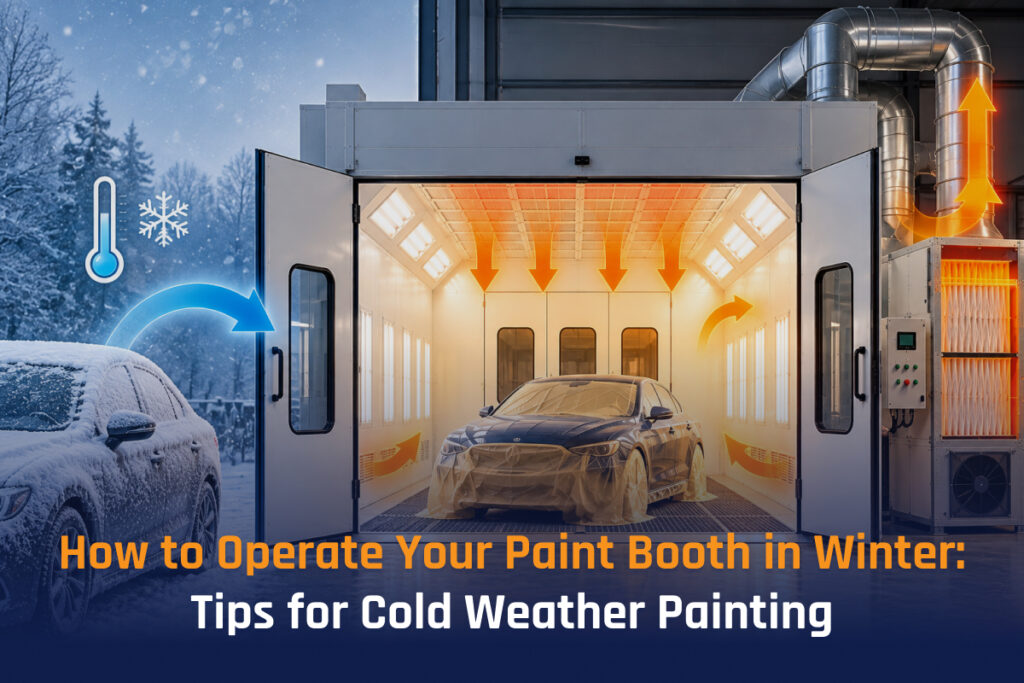
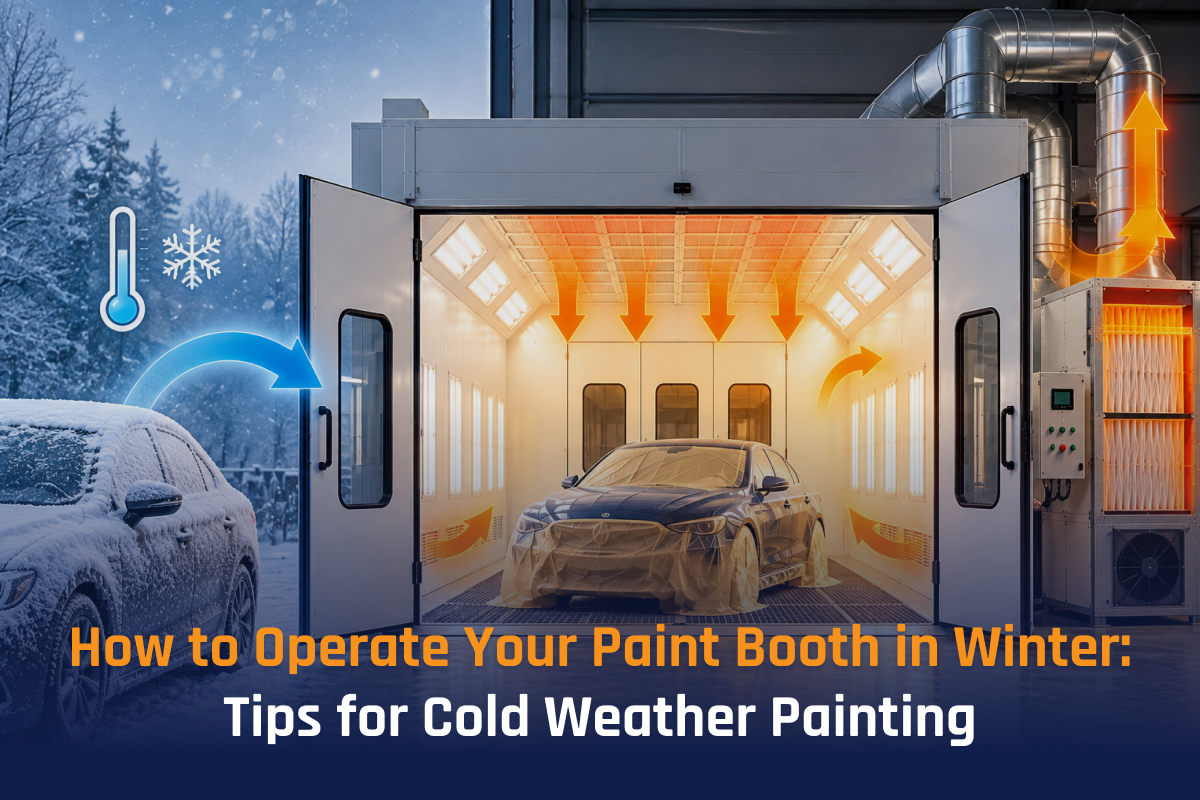
Cold air slows down everything inside a spray paint booth. Solvents flash off more slowly, paint takes longer to cure and adhesion can suffer when the surface is cold. Cold metal also attracts condensation, which leads to blushing, poor bonding and solvent pop. On top of that, your heating system has to work much harder to warm the outside air coming into the booth, so energy bills go up.
In cities with long, harsh winters, this is not a once-a-year problem. Every paint booth Chicago IL body shops run has to deal with freezing outdoor air for months, and the same goes for any paint booth Boston facility through the New England winter. The way you run your booth in these months makes a real difference to your finish and your energy bill.
8 Tips for Running Your Paint Booth in Winter
1. Warm Up the Booth Before You Start Painting
Don’t start spraying the moment you switch the booth on. The walls, floor and air need time to reach working temperature.
Tip: Turn on the booth and heater a little before the first job. Most paint makers recommend spraying at around 65°F to 75°F (18°C to 24°C), but always check the technical data sheet of the paint you use.
2. Bring Vehicles and Parts Inside Early
A car that has been sitting outside overnight is much colder than the air in the booth. Spraying on cold metal causes condensation and poor adhesion.
Tip: Move the vehicle or parts into the shop a few hours before painting so they can reach room temperature. A prep station is a good place for this, as you can do sanding and masking while the vehicle warms up.
3. Store Paint and Materials at Room Temperature
Cold paint becomes thick, which changes how it sprays and how it levels on the surface.
Tip: Never store paint, primer, hardeners or reducers in an unheated area. Keep them in a heated mixing room, so they are ready to use at the right temperature.
4. Service the Heating System Before Winter
Winter is the worst time to find out your burner or air make-up unit is not working properly.
Tip: Before the cold season starts, get the burner, thermostat and temperature sensors checked. Run a full cycle and confirm the booth reaches and holds the set temperature.
5. Control Humidity and Condensation
Warm air meeting cold surfaces creates moisture. This moisture can get trapped under the paint and cause cloudy or milky finishes.
Tip: Keep the booth and the vehicle at a steady temperature, and avoid big temperature swings between jobs. If moisture is a regular problem in your shop, a humidity control unit can help protect both your finish and your booth.
6. Don’t Rush the Bake Cycle
In winter, it is tempting to cut the cure time to keep the jobs moving. But undercured paint can stay soft and show problems later.
Tip: Follow the bake temperature and time your paint supplier recommends. Allow enough cool-down time before moving the vehicle out into the cold.
7. Keep Doors Closed and Seals Tight
Every time a booth door stays open, warm air escapes and cold air rushes in. This also disturbs booth pressure.
Tip: Keep doors closed during painting and curing, and replace worn door seals before winter starts.
8. Change Filters on Time
Clogged filters reduce airflow, so the heater runs longer to warm the booth. This means slower curing and higher energy bills.
Tip: Stick to your filter replacement schedule, even in slow months. For more ways to save on running costs, read our guide on how to lower energy consumption in paint booths.
Common Winter Paint Problems and Quick Fixes
| Problem | Likely Cause | Quick Fix |
| Slow drying | Low booth or panel temperature | Warm up booth and vehicle before spraying |
| Blushing (milky finish) | Moisture on cold surfaces | Bring vehicle in early, control humidity |
| Solvent pop | Heavy coats, short flash time | Apply thinner coats, allow full flash-off |
| Poor adhesion | Cold metal or condensation | Let panels reach room temperature |
| Soft paint after curing | Short or low bake cycle | Follow the full recommended bake cycle |
Why Choose Sunstar Paint Booths
At Sunstar Paint Booths and Auto Equipment, we build spray paint booths that perform well in every season. Our full downdraft paint booths come with dependable heating, balanced airflow, and quality filtration. Every booth is made from galvanised steel and is compliant with NFPA-33 and OSHA standards. If you want a booth that keeps your finishes consistent all year round, contact Sunstar Paint Booths today.
If you are searching for a paint booth for sale in Minneapolis that shops can depend on through some of the coldest winters in the country, our heated booths are built for exactly that.
FAQs
- What temperature should a paint booth be in winter?
Most paints spray best at around 65°F to 75°F (18°C to 24°C). Always follow the recommendations on your paint’s technical data sheet.
- Can I paint a car in cold weather?
Yes, as long as the booth, the vehicle and the paint are all at the right temperature. A heated paint booth makes this possible all year.
- Why does my paint look cloudy in winter?
This is usually blushing, caused by moisture getting trapped in the paint. It happens when warm, humid air meets a cold surface.